Gardener Lambeth: Recycling and Sustainability
 Gardener Lambeth is committed to creating an eco-friendly waste disposal area and a truly sustainable rubbish gardening area across the borough. Our approach combines practical on-site systems with borough-aligned waste separation, community partnerships and a low-carbon delivery fleet. As a Lambeth gardener service we focus on reducing landfill, increasing reuse and strengthening circular routes for green and household waste while maintaining beautiful, healthy gardens.
We set a clear recycling percentage target for our operations: a baseline goal of 65% recycling of all site-generated materials by 2030, with staged milestones each year. This target reflects the boroughs' approach to waste separation: separating food, dry recyclables and garden waste at source, and ensuring compostable material is diverted to community composting and approved transfer stations. Our internal reporting tracks diversion rates, so Gardening Lambeth can show steady month-on-month improvement.
 Local transfer stations play a key role in closing the loop. We route sorted materials to nearby civic and commercial transfer stations that accept garden waste, wood, soil and bulky items for processing. Where appropriate we use local civic sites and authorised third-party transfer partners that prioritise composting and material recovery. In partnership with borough services we follow local sorting rules—food waste in dedicated caddies, glass and cans in dry recycling streams, and brown-bin garden collections where available—to maximise the recovery rate.
Sustainable Rubbish Gardening Area: Practical Measures
Our sustainable rubbish gardening area is designed to be compact, safe and efficient. We create designated sorting bays on site for:
- Green waste (grass cuttings, prunings) for composting and biomass;
- Reusable materials (bricks, paving, timber) diverted to local reuse networks;
- Contaminants separated and routed to authorised facilities.
These measures work in harmony with the Lambeth approach to household and commercial waste separation. We encourage Gardener in Lambeth clients to adopt simple sorting at source so material arrives ready for transfer, reducing double handling and contamination. On-site compost bays, clear signage and weekly scheduling keep the area tidy and effective.
 Partnerships with charities and community groups amplify impact. We collaborate with local reuse charities, repair cafes and community compost schemes to divert usable items from disposal and to support social outcomes. Salvaged bricks, timber and planters are offered to social enterprises and community gardens; surplus compost and mulch support local allotments. These partnerships embed our work in the borough’s circular economy and help Gardening Lambeth deliver more than just garden maintenance.
Low-Carbon Fleet and Operational Commitments
To lower transport emissions we operate a transition plan toward low-emission vehicles. Our aim is to have a majority low-carbon van fleet within the next five years—hybrid and electric vans where routes and charging infrastructure allow. These vehicles reduce particulate and CO2 emissions while maintaining the reliability needed for garden services. As part of fleet management we monitor mileage, consolidate loads to minimise trips and prioritise local transfer stations to shorten haul distances.
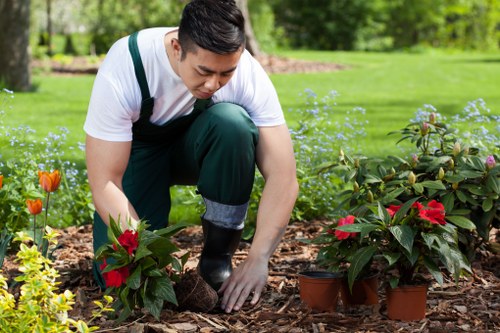 Our sustainability plan is practical and measurable. Key actions include:
- Annual recycling audits to measure progress toward the 65% target;
- Material routing agreements with local transfer stations and authorised processors;
- Charity partnerships to reuse and redistribute salvageable items;
- Fleet decarbonisation with electric and hybrid vans and route optimisation;
- On-site sorting hubs for clean separation, reducing contamination.
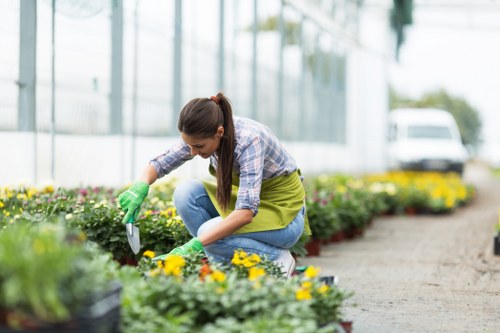 We also emphasise behaviour change: training for the team on correct sorting, compacting green waste to reduce transport volume, and using mechanical aids where possible to avoid damage and waste. The Lambeth gardening service model we follow aligns with borough guidance on segregation of food waste, dry recycling and garden material to improve overall recycling rates across residential and commercial work.
Reporting is open and action-focused. Each quarter we publish anonymised diversion statistics so clients and partners can see progress toward the recycling percentage target. These reports cover weight diverted to composting, reuse volumes donated to charities and the percentage of waste routed through low-carbon transport. By tracking these metrics, Gardening Lambeth ensures continuous improvement and adapts operations where contamination or inefficiency appears.
Designing a sustainable rubbish gardening area in a dense borough requires coordination with local infrastructure. We remain flexible: when borough collections are unavailable we use authorised transfer stations; when community composting offers a better outcome we prioritise that. This pragmatic mix reduces landfill, supports local circular economies and keeps the Lambeth gardener ethos centred on regeneration rather than disposal.
In short, Gardener Lambeth combines practical site design, measured targets, community partnerships and a low-carbon fleet to deliver a resilient, eco-friendly waste disposal area. Our commitment is to meet and exceed borough recycling expectations, to partner with charities and transfer stations, and to provide sustainable garden services that benefit people and planet.